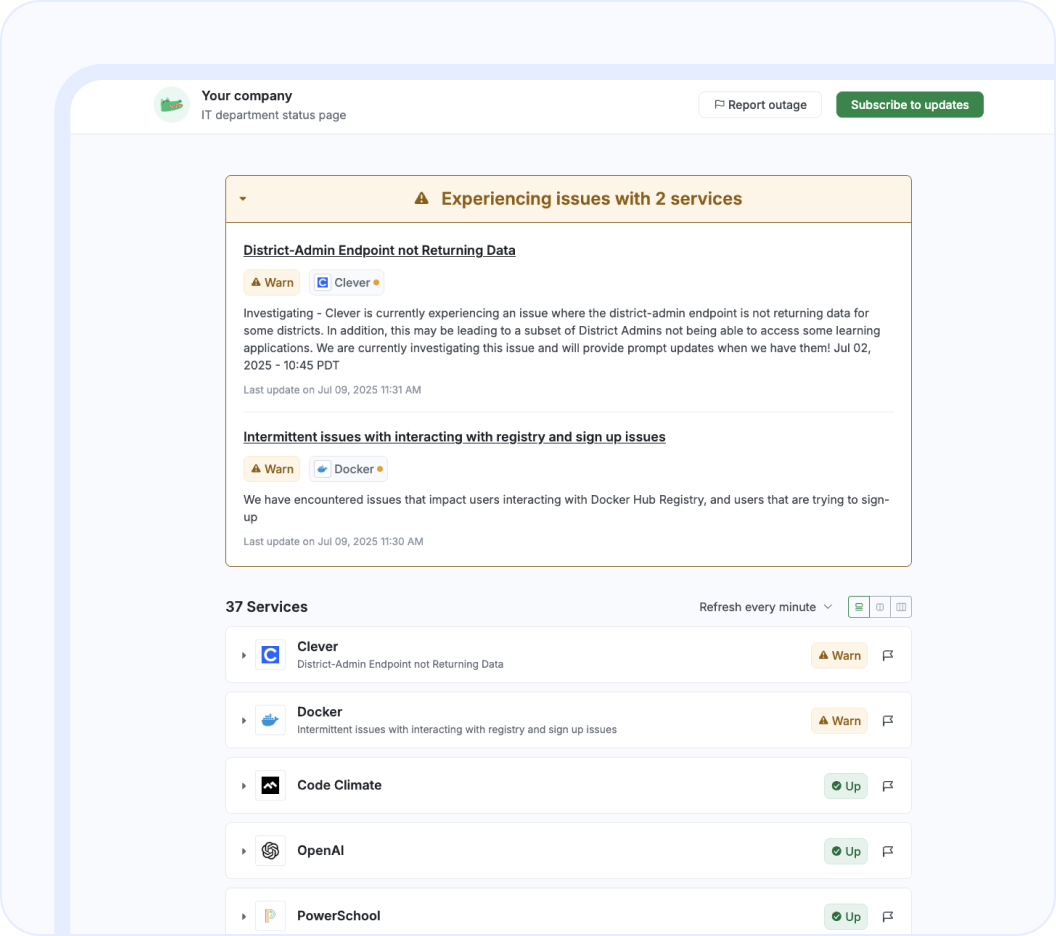
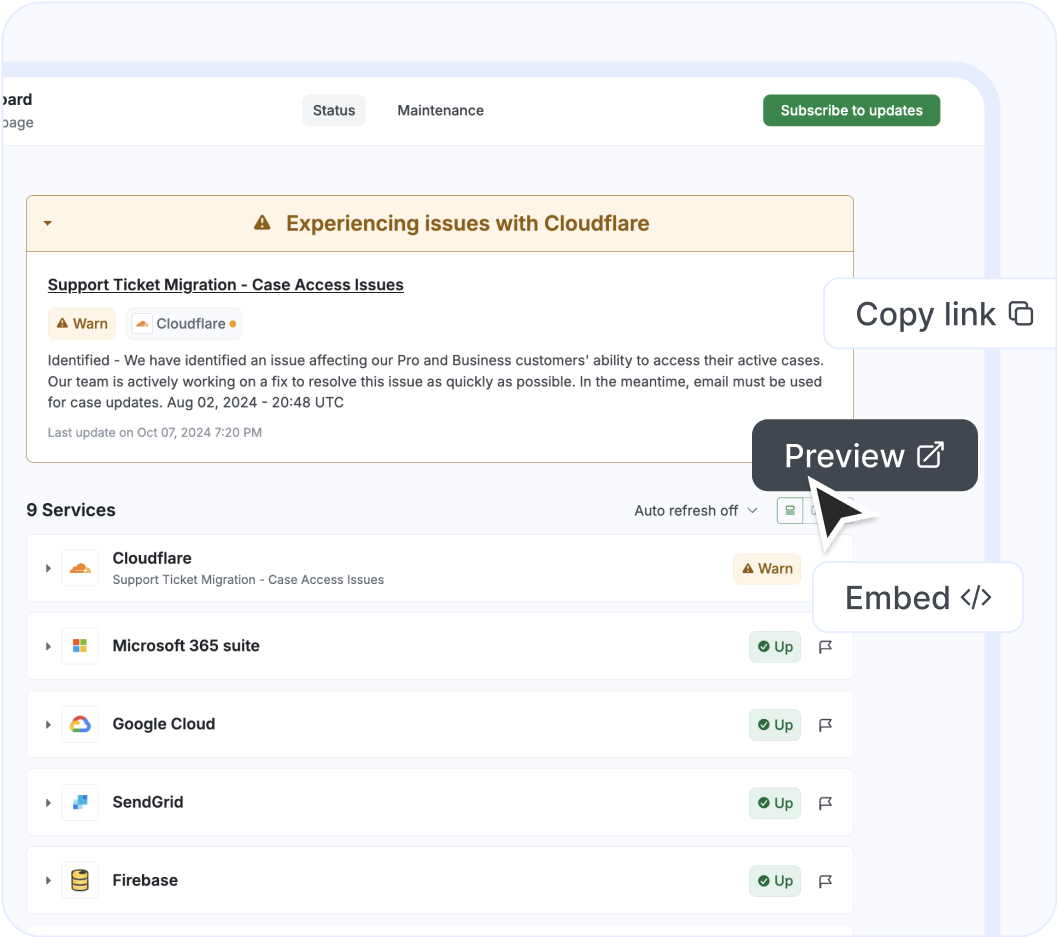
Cloud Monitoring – Monitor Status of your Providers

Monitor SaaS providers, cloud services, and third-party dependencies from a centralized platform built for operational visibility.

Traditional monitoring tools focus on infrastructure. Modern cloud operations require visibility into the statuses of external services your business depends on every day.
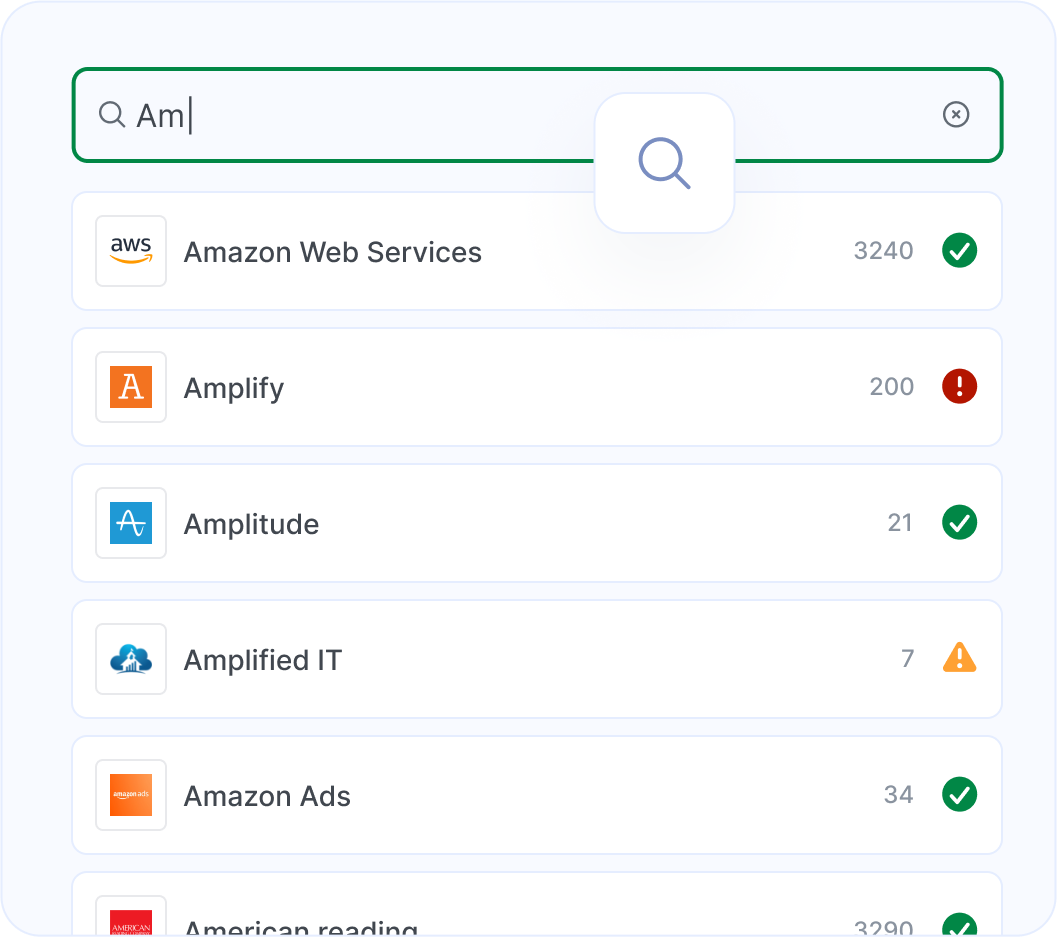
List of cloud services status

Why traditional cloud monitoring is not enough

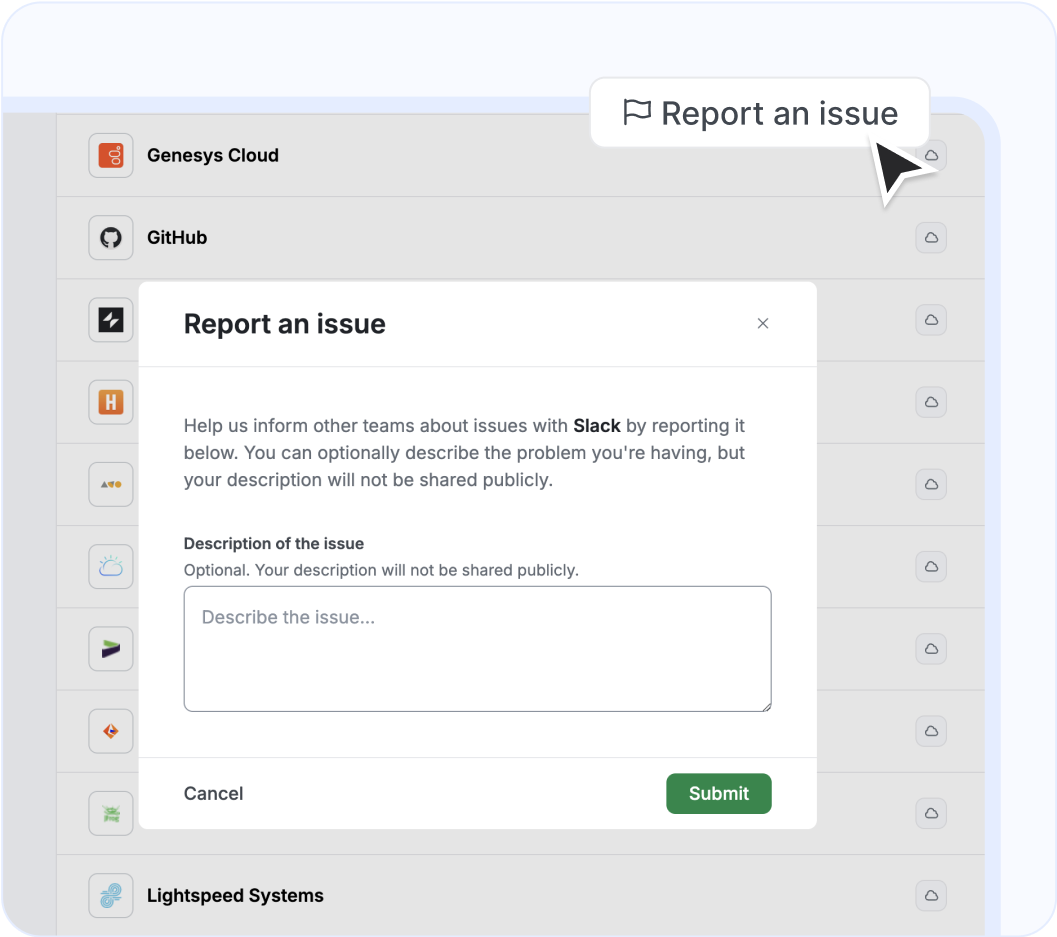
Report an issue window

Traditional cloud monitoring tools are great at tracking servers, applications, and infrastructure metrics, but they often miss SaaS provider outages, third-party dependencies, and external incidents. That leaves a visibility gap when a vendor fails and your internal systems still appear healthy.

Monitor servers.
Monitor applications.
Monitor internal infrastructure.
But often miss SaaS providers.
Miss third-party dependencies.
Miss provider outages.

That gap matters because provider communication can lag real-world impact. StatusGator closes it by surfacing user reports, incident patterns, and early warning signals before official status updates arrive in some cases.

Schedule a demo

What early cloud visibility looks like

Real-world example

GitHub outage on April 23, 2026

The first signs of trouble did not come from GitHub’s status page. They came from users reporting failed workflows and unexplained errors, and StatusGator issued an Early Warning Signal at 14:33 UTC, seven minutes before GitHub officially acknowledged the outage.

Timeline

14:26 UTC

First outage reports begin coming into StatusGator.

14:33 UTC

StatusGator issues an Early Warning Signal based on user reports and detected anomalies.

14:40 UTC

GitHub officially acknowledges the incident.

15:22 UTC

Final user reports taper off as services return to normal.

Why this matters

  • Partial outages are harder to detect.
  • User reports and community chatter often reveal problems first.
  • A few minutes of early warning can reduce response time and confusion.

What modern cloud monitoring should include

Infrastructure monitoring

Tracks servers, network health, and internal application availability.

Observability

Helps teams understand why internal systems behave the way they do using logs, metrics, and traces.

SaaS monitoring

Adds visibility into external tools and cloud vendors your business depends on.

External dependency monitoring

Monitors third-party services so teams know when an upstream outage is affecting their stack.

Cloud status monitoring

Tracks the status pages, incidents, and degradation signals of cloud services across vendors.

Category Focus
Cloud monitoring Infrastructure, apps, servers, and service health.
Observability Logs, metrics, traces, and root-cause analysis.
SaaS dependency monitoring External vendors, cloud services, and provider outages.

Why StatusGator fits cloud monitoring teams

StatusGator cloud monitoring dashboard

StatusGator helps cloud teams monitor more than just their own infrastructure. It combines vendor status aggregation, Early Warning Signals, outage history, and alerting into one monitoring layer for dependencies that traditional cloud tools often overlook.

  • Monitor cloud services and SaaS vendors from one dashboard.
  • Get early visibility into provider outages.
  • Reduce blind spots caused by external dependencies.
  • Keep support, DevOps, and engineering aligned.
  • Use history and maps to understand outage patterns over time.
Monitor cloud services

How StatusGator works

Step 1

Add the services you depend on

Track cloud vendors, SaaS tools, APIs, and other external services your environment relies on.

Step 2

Watch status, signals, and incidents

StatusGator monitors official pages and user-driven outage signals, then normalizes them into clear statuses and alerts.

Step 3

Alert the right teams

Send notifications to Slack, Microsoft Teams, Google Chat, Discord, email, SMS, and webhooks so the right people know quickly.

Why teams choose cloud monitoring that includes SaaS visibility

SaaS Cloud Monitoring Dashboard

A modern cloud monitoring platform should reduce tab switching, centralize alerts, and make dependencies visible before incidents escalate. It should help teams understand not only what is broken, but whether the problem is inside the stack or outside it.

Fewer tabs.
Centralized alerts.
Better operational awareness.
Faster incident triage.
Stronger dependency visibility.
Monitor cloud services

Built for Modern Cloud Operations

Cloud monitoring is evolving beyond infrastructure. Modern organizations require visibility into:

SaaS providers External dependencies Cloud vendors Operational incidents Provider reliability Outage intelligence

Cloud monitoring helps IT teams understand the tools and strategies required for modern cloud operations.

Monitor the cloud services your infrastructure depends on

Cloud monitoring should not stop at your servers. With StatusGator, you can monitor the SaaS vendors and external services that shape your actual production experience.

Frequently Asked Questions

Cloud monitoring is the process of monitoring cloud infrastructure, SaaS platforms, and third-party services for availability and operational health.
Monitoring alerts you that something changed, while observability helps explain why it changed.
Because many incidents are caused by third-party tools and cloud services outside your infrastructure.
It is the practice of watching the vendors and services your business relies on so you can detect upstream outages faster.
Yes, Early Warning Signals can surface likely incidents before official acknowledgment in some cases.
Providers often wait for internal verification before publicly acknowledging incidents.